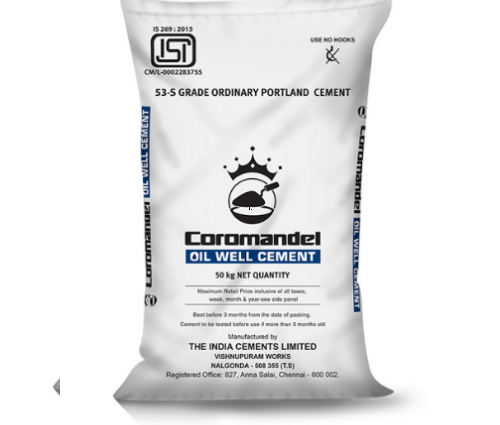
In the well-cementing process of oil and gas, additives play a very important role. Several cement additives were developed that are used in the well-operation of oil and gas. For any kind of cementing job for formulating the right cement slurry, proper additive must be selected, and also the right quantity should be added.
All these additives have several functions and they are broadly classified as:
- Accelerator
- Dispersants
- Extenders
- Fluid loss agents
- Retarders
Each of the above classifications has got different additive categories that were developed to perform nearly the same function while designing cement slurry. However, there are a few additives under each type that are often used in the design of cement slurry for oil/gas well-cementing operations.
Bisley International is a well-known company that deals with various kinds of materials that may be needed for the application of cement additives needed for the oil and gas well-cementing process.
In well cementing, for oil and gas wells, all the cement systems are suitably designed to meet various temperature ranges that can be right from below sub-zero temperatures in permafrost zone areas to 662°F which is 350°C particularly for thermal recovery and also geothermal wells.
They may also encounter pressures within the ranges from ambient to as high as 30,000 psi i.e. 200 MPa for deep wells. To accommodate such wide variations in the conditions, it was only possible by developing certain cement additives.
As per the recommended practice of the American Petroleum Institute, additives are the necessary materials added into cement slurry for modifying or enhancing the desired property. Various cement additives chosen for cementing operations will be an important part of your sound construction, design, and also well integrity.
Various additives are available for enhancing the oil well slurry properties and also achieving the successful placement between the geological and casing formation, rapid compressive development of strength, and also adequate zonal isolation throughout the lifetime of oil and gas well.
Additives are usually added for the cement formulations for the following reasons:
- For dispersing cement particles
- For modifying the setting time under the required condition of temperature and pressure in the well
- To control the filtration losses for the liquid coming from cement slurry after and during the placement
- To compensate for the cement shrinkage as it will set and harden
- To improve cement and casing interfacial bonding
- To control formation fluids influx and migration into the cement column while setting.
There are several types of cement additives have been developed for allowing the use of cement in various applications of oil and gas well. Each type has also got different additives, which have been developed for performing almost a similar function during the cement slurry design.
However, a few additives are there under each of the major types that are usually used in the design of cement slurry for oil/gas well-cementing operations.
Although several different types of additives are used for enhancing the performance of cement during the cementing of oil and gas well, a few common additives are often used during cementing operations.